
Introduction:
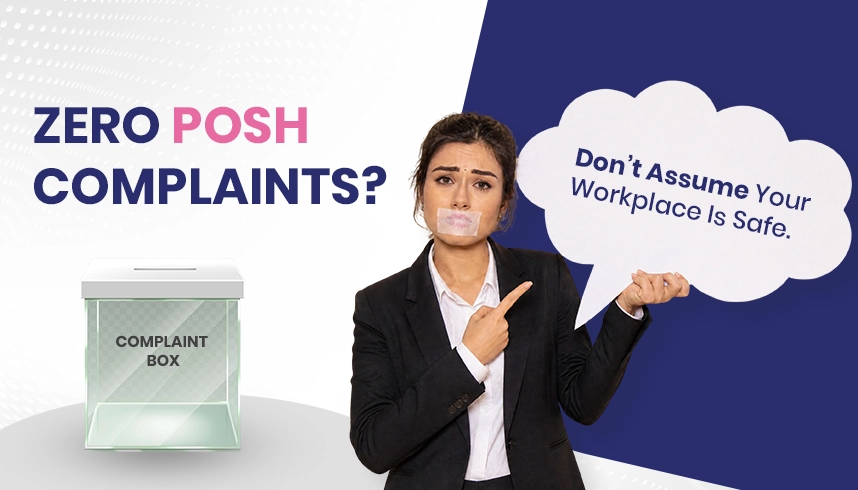
A workplace with zero POSH complaints may appear safe, but the absence of complaints does not necessarily mean the absence of workplace harassment or risk. Zero POSH complaints means that no formal POSH complaint has been reported through an organization's designated complaint mechanism during a particular period. It does not necessarily mean that the workplace is free from harassment or POSH-related risks.
Employees may hesitate to report inappropriate behavior due to fear, lack of awareness, confidentiality concerns, workplace culture, or uncertainty about the complaint process. Under the POSH Act, employer responsibilities extend beyond responding to complaints and include prevention, awareness, and accessible reporting mechanisms. Therefore, a clean complaint record alone does not establish effective POSH compliance or a risk-free workplace.
What Does Zero POSH Complaints Actually Mean?
It does not necessarily mean that no workplace harassment has occurred. Employees may choose not to report incidents for several reasons, including fear, lack of awareness, confidentiality concerns, or uncertainty about the process. Therefore, companies should distinguish between zero reported complaints and zero workplace incidents. Effective POSH compliance requires preventive measures, awareness, and accessible reporting channels, rather than relying solely on complaint numbers.
Can a Company Have Zero POSH Complaints and Still Have a POSH Risk?
Yes, a company can have zero reported POSH complaints and still face workplace harassment risks. A lack of formal complaints does not necessarily establish that no incidents have occurred or that the POSH compliance framework is effective. Employees may avoid reporting due to lack of awareness, fear of retaliation, confidentiality concerns, social pressure, or limited trust in the complaint process. Therefore, zero complaints should not be treated as proof of a harassment-free workplace. Regular POSH awareness, accessible reporting channels, and a trusted Internal Committee remain essential.
Why Do Employees Sometimes Avoid Filing POSH Complaints?
Employees may avoid filing POSH complaints for several reasons, including fear of workplace consequences, lack of awareness, confidentiality concerns, and uncertainty about the reporting process. Common barriers include:
- Employees may worry about affecting their role, career, or professional relationships.
- Some employees may not fully understand their POSH rights or the available complaint mechanism.
- They may fear that personal details or the incident could become known to colleagues.
- Employees may hesitate because of social pressure or concerns about how others will perceive them.
- They may not know the Internal Committee or the appropriate reporting channel.
- Some employees may choose to remain silent or address the matter informally instead of making a formal complaint.
Is an Internal Committee Enough to Ensure POSH Compliance?
No. Merely constituting an Internal Committee does not by itself establish effective POSH compliance. Companies must also address applicable requirements relating to prevention, awareness, complaint mechanisms, training, procedures, and employer duties. Under Section 4 of the POSH Act, the Internal Committee must be constituted as prescribed. Employees should know about the IC, how to approach it, and the complaint mechanism. Sections 9 and 11 address complaints and the inquiry process. The IC must maintain confidentiality, follow due process, and support workplace prevention and awareness.
What Should Companies Check When There Are No POSH Complaints?
A zero-complaint record should encourage companies to review whether their POSH compliance framework is actually working and whether applicable POSH compliance requirements are being addressed. Companies can use the following checklist:
- POSH Policy: Is the policy clearly communicated and accessible to employees?
- Internal Committee: Is the IC properly constituted in accordance with Section 4 of the POSH Act?
- IC Training: Have IC members received appropriate training on their roles and procedures?
- Employee Awareness: Do employees know their rights and how to raise a complaint?
- Reporting Mechanism: Is the complaint process clearly explained and accessible?
- Confidentiality: Are employees confident that sensitive information will be handled appropriately?
- Annual Requirements: Are applicable POSH reporting, awareness, documentation, and other compliance requirements being addressed?
Does POSH Compliance Apply Even When No Complaint Is Filed?
Yes. Applicable POSH compliance requirements continue even when no complaint has been filed. The employer's responsibilities under the POSH Act are not limited to responding to formal complaints. Section 19 outlines employer duties relating to prevention, awareness, and complaint mechanisms. This includes maintaining the required policy, constituting the Internal Committee, conducting awareness and training programs, providing an accessible complaint mechanism, and fulfilling applicable reporting requirements. These duties continue regardless of whether a complaint is filed.
How Can Companies Detect POSH Risks Without Waiting for a Complaint?
Companies can strengthen POSH awareness in workplace initiatives through proactive measures that help identify potential risks before they result in a formal complaint. Useful preventive measures include:
- Educate employees about appropriate workplace conduct, rights, and reporting options.
- Conduct regular training for employees and IC members.
- Review workplace practices, communication, and concerns to identify potential gaps.
- Ensure employees know where and how to raise concerns.
- Keep Internal Committee members familiar with their roles and applicable procedures.
- Provide appropriate channels through which employees can raise concerns or seek guidance without unnecessary barriers.
What Are the Common POSH Compliance Gaps in a “Zero-Complaint” Workplace?
A workplace with no reported complaints can still have gaps in its POSH compliance framework. Common issues include:
- Employees may not understand workplace protections or reporting options.
- Committee members may lack sufficient understanding of their roles and procedures.
- A written policy may exist without effective communication or employee awareness, creating gaps in POSH policy compliance and the employer's responsibilities under the POSH Act.
- Employees may not know whom to approach or how to raise concern.
- Training, awareness activities, meetings, and applicable compliance records may not be properly maintained.
- No reported complaints should be considered the sole indicator of a safe or compliant workplace.
How Can Employers Build a Safer Workplace Under POSH?
Employers can strengthen POSH workplace safety by treating their responsibilities under the POSH Act as an ongoing obligation rather than limiting compliance to responding to complaints. Regular awareness programs and POSH training can help employees understand acceptable workplace conduct and their rights.
Companies should provide accessible reporting channels and ensure employees know how to approach the Internal Committee. Confidentiality should be protected while handling concerns and complaints should be addressed through the prescribed process and within applicable timelines. Periodic reviews can also help identify and address compliance gaps proactively.
POSH Compliance Checklist for Companies:
| Compliance Area | What companies Should Check |
|---|---|
| POSH Policy | Is the policy documented, updated, and clearly communicated to employees? |
| Internal Committee | Is the IC properly constituted in accordance with Section 4 of the POSH Act? |
| Training | Have employees and IC members received appropriate POSH Training? |
| Awareness | Do employees understand their rights and available reporting mechanism? |
| Compliant Process | Is the procedure for raising and handling complaints clearly explained? |
| Confidentiality | Are complaints and related information handled with appropriate confidentiality? |
| Annual Requirements | Are applicable POSH reporting, documentation, and other compliance requirements being addressed? |
Conclusion
Zero POSH complaints should not be viewed as proof that a workplace is completely free from risk. Effective POSH compliance requires more than responding to complaints. Regular awareness, preventative measures, accessible reporting channels, trained Internal Committee members, confidentiality, and procedural preparedness help organizations create a workplace where employees understand their rights and feel supported.